
Christmas Tree Allergy and Pet Safety: A Practical Guide
A Christmas tree allergy can have several triggers, including mould spores, strong natural scents (terpenes), dust mites, pollen, insect droppings and pesticide residue. For households with pets, real Christmas trees are generally considered low in toxicity, but fallen needles, tree water, electrical cables and decorations such as tinsel can present risks.
This guide explains how to reduce potential allergy symptoms, keep your Christmas tree safe around dogs and cats, and create a festive display that's comfortable for everyone at home. If allergy symptoms are severe or persistent, consult your GP.
Book your tree online for a fresh-cut Nordmann fir with delivery included, and add our stand and installation package if you'd like the team to set it up.
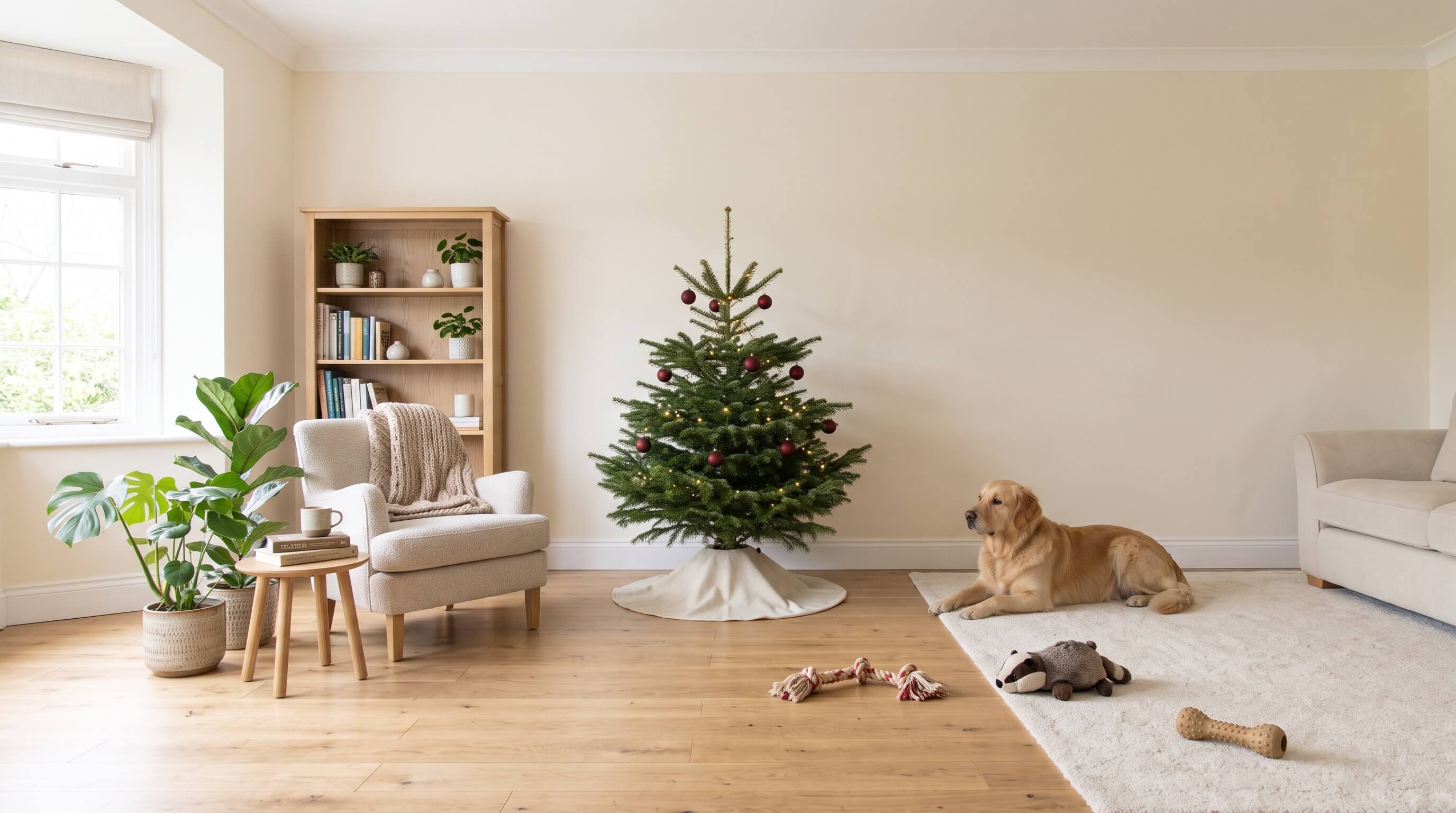
Christmas tree allergy: common triggers
"Christmas tree syndrome" is an informal term for allergy-like symptoms that some people experience after bringing a Christmas tree indoors. Several possible triggers may be present on real Christmas trees:
- Mould spores, which can be present on the tree.
- Strong natural scents, caused by compounds known as terpenes.
- Dust mites and pollen, which may accumulate on the branches.
- Insect droppings or pesticide residue, which can also trigger reactions in sensitive individuals.
Artificial Christmas trees aren't necessarily free from allergens either. They can collect dust and mould during storage, particularly when kept in damp spaces, so cleaning them before decorating is important.
How to reduce allergy symptoms with a real tree
A few precautions can help reduce exposure to potential allergens when bringing a real Christmas tree into your home.
- Choose a freshly delivered tree. A fresh Christmas tree is a good starting point, particularly if you're concerned about allergens.
- Shake or hose it down first. Before bringing the tree indoors, shake it outdoors or rinse it with water to help remove dust and loose debris. Consider wearing a mask while doing this, and allow the tree to dry before decorating.
- Cover up when decorating. Wear long sleeves and gloves to reduce direct skin contact with the needles and branches.
- Dust the decorations. Clean decorations that have been stored away since last Christmas before hanging them on the tree.
- See your GP if symptoms persist or become severe. If symptoms continue despite taking precautions, seek medical advice.
Keeping needle drop under control also helps maintain a cleaner environment, particularly in homes with pets. Allowing the water reservoir to run dry can increase needle loss, so keep it topped up regularly. You can find more advice in our Christmas tree care guide.
Are real Christmas trees safe for dogs?
Real Christmas trees are generally considered to have low toxicity, but chewing the needles or branches can expose dogs to natural oils that may cause mouth irritation, excessive salivation, vomiting or diarrhoea.
Other risks come from the tree's decorations and surroundings:
- Fallen needles can become embedded in paws.
- Tree water may become contaminated, so prevent your dog from drinking from the stand.
- Electrical cables can be dangerous if chewed.
- Tinsel can cause serious intestinal blockages if swallowed.
- Baubles should be securely attached, with fragile decorations placed high enough to stay out of reach.
If you suspect your dog has swallowed tinsel, a bauble or another potentially dangerous decoration, contact your vet promptly.
Is a Christmas tree safe for cats?
Cats can be particularly curious around Christmas trees, especially when there are branches to climb and decorations to investigate. Natural tree oils can irritate a cat's mouth and stomach if chewed, while swallowed needles may cause irritation or injury.
Needle retention is worth considering when choosing a real Christmas tree. Nordmann fir, available through our fresh-cut Christmas tree delivery in London, is known for its slow needle drop. However, even trees with excellent needle retention will eventually shed some needles, so regular sweeping is still important.
Our guide to how long a real Christmas tree lasts explains how to recognise the signs of a tree that's beginning to dry out.
Potted Christmas trees introduce two additional concerns for cat owners:
- Fertiliser in the pot may be toxic to cats and can leak into the watering tray.
- Soil may attract cats looking for somewhere to dig or use as a litter tray.
It's also important to switch Christmas tree lights off at the mains whenever pets are left unsupervised, especially if your cat likes climbing or chewing electrical cables.
A pet-friendly set-up: heavy stand and wall anchor
Keeping your Christmas tree secure and choosing suitable decorations can help reduce the risk of accidents involving pets.
- Use a heavy stand. A sturdy base helps prevent the tree from tipping over if a pet brushes against it or tries to climb it.
- Anchor the tree to a wall. Securing the tree provides additional stability, particularly in homes with climbing cats or energetic dogs.
- Hang breakable decorations high. Keep glass baubles and other fragile ornaments on the upper branches, making sure they're securely attached.
- Avoid tinsel. Tinsel can be particularly dangerous if swallowed, so leaving it off the tree is a sensible precaution.
- Keep cables tidy. Position electrical cables out of reach and switch the lights off at the mains when leaving the house.
- Prevent access to tree water. Use a suitable cover or barrier around the stand to stop pets drinking from the reservoir.
- Sweep up fallen needles. Check around the base regularly to reduce the risk of needles becoming embedded in paws or being swallowed.
Our fresh-cut Nordmann firs can be delivered, installed and collected. With the optional stand and installation package, the team secures the tree in a water-reservoir stand and tidies up fallen needles. January collection can also be arranged. If you have pets that may climb or knock the tree, consider adding a suitable wall anchor once it's installed.
When an artificial tree is the better choice
Although real Christmas trees are a popular festive tradition, artificial trees may be more suitable for certain households.
- Someone in your household has persistent allergies. If real Christmas trees consistently trigger symptoms, an artificial tree may help reduce exposure to natural scents and other tree-related allergens.
- Your pet repeatedly climbs or chews the tree. If securing the tree and adjusting decorations doesn't prevent risky behaviour, an artificial alternative may be easier to manage, although it still requires precautions.
- You prefer less maintenance around pets. Artificial trees don't require daily watering or a water reservoir, and they generally don't shed natural needles.
However, artificial Christmas trees can also accumulate dust and mould during storage. Clean the branches and decorations before putting them up, particularly if anyone in your household has allergies.
Environmental impact is another factor worth considering. An artificial Christmas tree may need around 10 years of reuse to offset its higher initial carbon footprint compared with a real tree that's properly recycled. Our guide on whether a real tree is greener than a fake one explores the differences in more detail.
For households choosing a real tree, a stable stand, suitable decorations and regular cleaning can help create a safer festive environment. Our real Christmas tree delivery in London service makes getting a fresh Nordmann fir home easier, without having to transport it yourself.
FAQs
What is Christmas tree syndrome?
Christmas tree syndrome is an informal term for allergy-like symptoms associated with Christmas trees. Potential triggers include mould spores, natural scents called terpenes, dust mites, pollen, insect droppings and pesticide residue. If symptoms are severe or persistent, consult your GP.
Are real Christmas trees safe for dogs?
Real Christmas trees are generally considered to have low toxicity, but chewing the needles or branches can cause mouth irritation, excessive salivation, vomiting or diarrhoea. Fallen needles can also become embedded in paws, while water in the stand may become contaminated. Use a sturdy stand, consider securing the tree to a wall and avoid decorations such as tinsel that can cause serious problems if swallowed.
Is a real Christmas tree safe for cats?
A real Christmas tree can be enjoyed in a home with cats, provided suitable precautions are taken. Natural tree oils may irritate a cat's mouth and stomach, and swallowed needles can cause irritation or injury. For potted trees, keep fertiliser and watering trays out of reach, and discourage cats from digging in the soil. Securing the tree and keeping electrical cables away from curious pets can also help prevent accidents.
Is an artificial tree better for allergies?
An artificial Christmas tree may be more suitable for people who react to natural tree scents, mould spores or other allergens associated with real trees. However, artificial trees can collect dust and mould during storage, so cleaning the tree and decorations before use is still important.
With careful placement, secure decorations and a few sensible precautions, you can enjoy a real Christmas tree while reducing potential risks for family members and pets. Book your tree online with delivery included, and choose our optional stand and installation package for a convenient setup.